
Why Walking After Meals Is Both Sunnah and Science, For Muslim Women Over 40
The afternoon slump is real. The heavy feeling after meals is real. The energy that used to be there and now is not, also real. What if the answer requires no gym, no equipment, and no overhaul? Just ten minutes, a pair of shoes, and an intention
Umm Sumaya
6/9/20269 min read
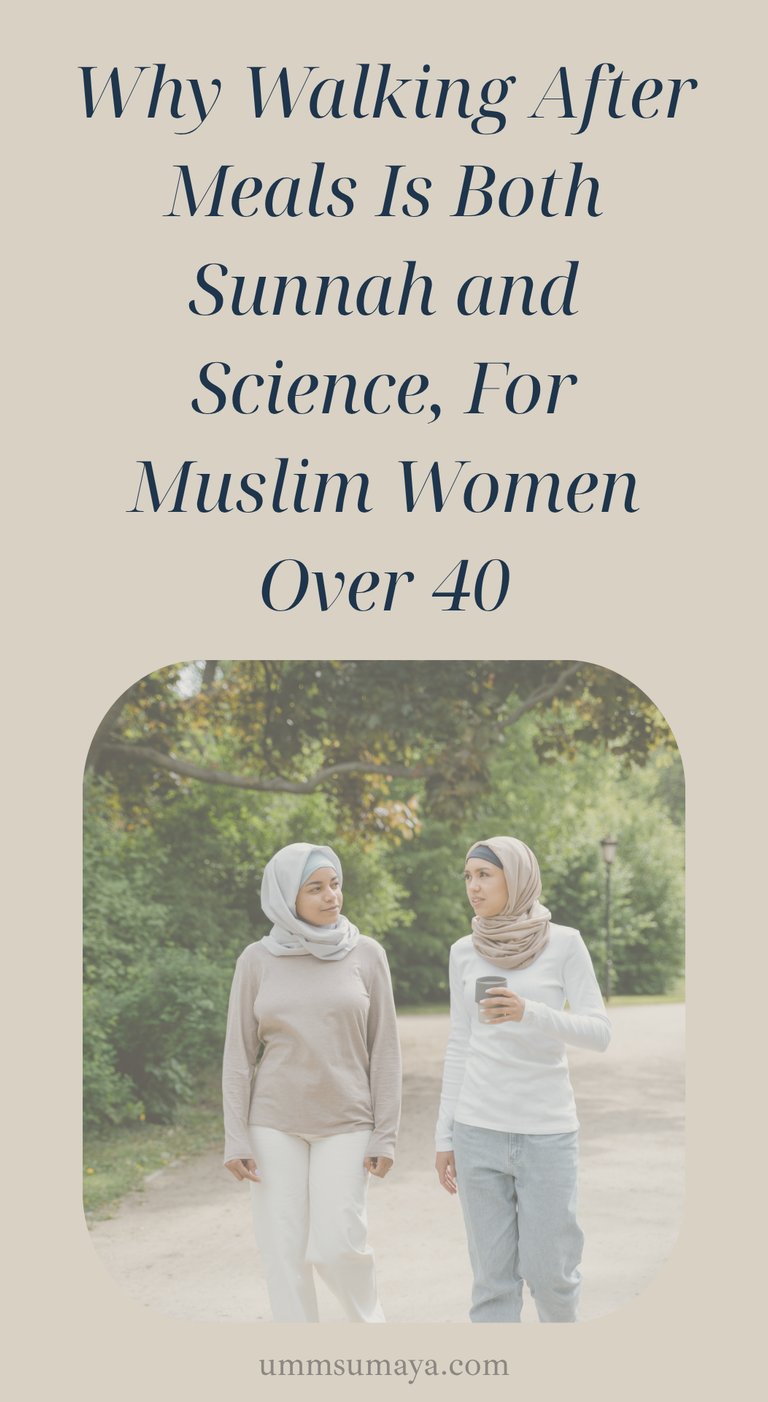
After lunch, the pull toward the sofa is real.
The meal is finished. The afternoon stretches out. The body feels heavy and the energy dips. Everything in you wants to be horizontal. And if you are over 40, you will know that this is not laziness, it has become a pattern. A reliable, daily pattern that no amount of earlier nights or better intentions seems to shift.
What if the answer to this particular pattern is not a complicated protocol, a supplement stack, or a fitness overhaul?
What if it is ten minutes, and it is already in the sunnah?
Walking after meals is one of the simplest, most accessible, and most overlooked health habits available to Muslim women over 40. It costs nothing. It requires no equipment. It fits around prayer times. And modern science is now confirming what the prophetic tradition pointed toward centuries ago, that gentle movement after eating changes the body's response to food in ways that matter deeply for women navigating the hormonal shifts of midlife.
This post is for the sister who feels like she cannot commit to a full fitness routine right now. It is not asking her to. It is asking her for ten minutes, and an intention.
The Body Is an Amanah, And That Changes Everything


Your health is listed alongside your youth, your wealth, and your life itself. This is not an afterthought in the deen. The care of the body is woven into the Islamic understanding of responsibility and gratitude.
For many Muslim women, this reframe is genuinely transformative. Exercise is not about appearance. It is not about fitting into a certain size. It is not about meeting a cultural standard of what a woman's body should look like. It is about honouring what Allah gave you, particularly in the season of your 40s, when the body is asking for more intentional care than it needed before.
When you walk after a meal with the intention of caring for the amanah of your body, that walk becomes an act of worship. The intention changes its weight entirely.
"Take advantage of five before five: your youth before your old age, your health before your illness, your wealth before your poverty, your free time before your preoccupation, and your life before your death."
— Reported by Ibn Abbas, classed as saheeh by al-Albani
Before we talk about blood sugar and hormones, we need to begin where Islam begins, with the principle that grounds all of this.
The body is not yours. It is an amanah, a sacred trust placed in your care by Allah. How you nourish it, how you move it, how you rest it, these are not secular lifestyle choices. They are acts of stewardship over something that was given to you, and that you will be asked about.
What the Sunnah Teaches Us About Movement and Eating
The prophetic lifestyle was inherently active. There was no separation between the deen and the body, movement was woven into daily life through walking to the masjid, to the market, to visit family, to fulfil obligations. Rest was understood as something that followed work and worship, not something that filled the spaces between them.
On the specific matter of rest after eating, the scholars narrated guidance that discouraged heavy sleep immediately after a meal, and encouraged gentle wakefulness and movement instead. The body was understood to function better, and the heart to remain more alert, when meals were followed by activity rather than inertia.
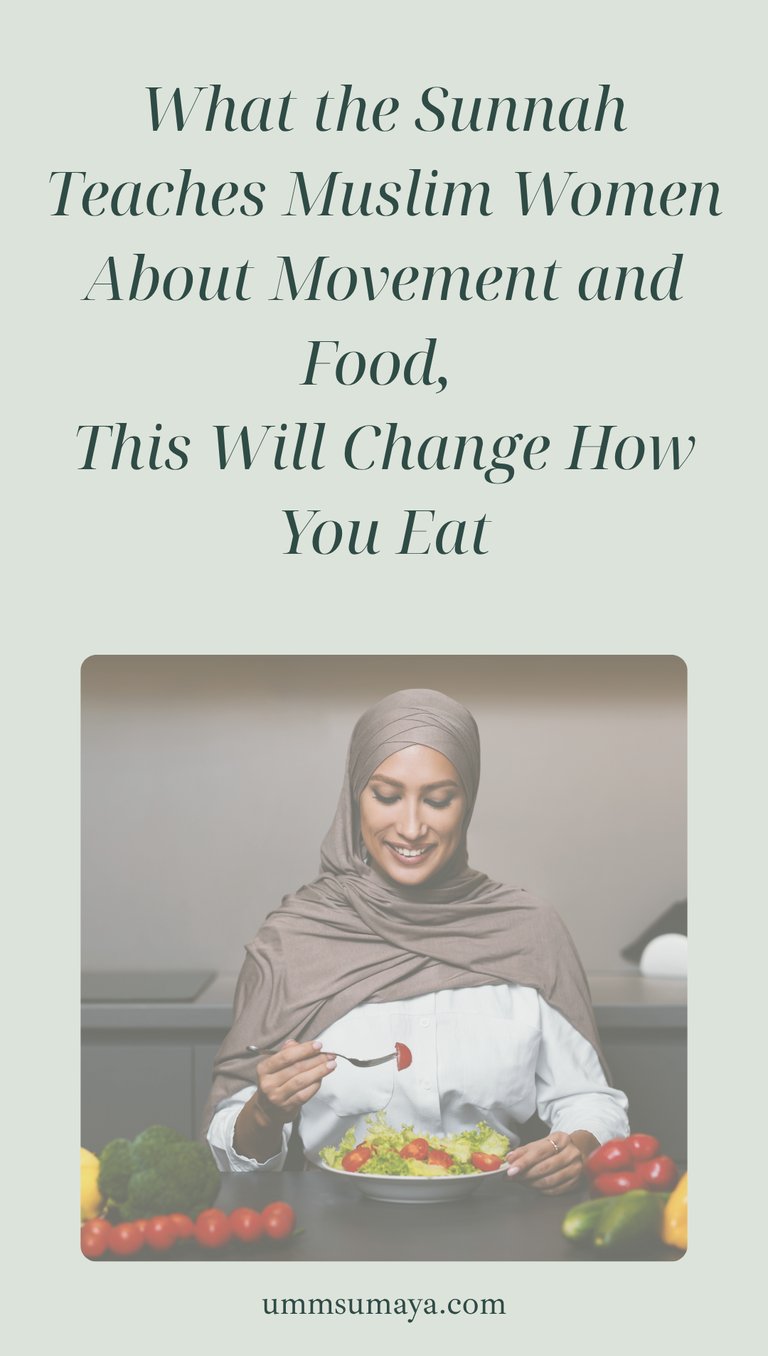
"The son of Adam does not fill any vessel worse than his stomach. It is sufficient for the son of Adam to eat a few mouthfuls, to keep him going. If he must do that, then let him fill one third with food, one third with drink and one third with air."
— Ibn Majah, classed as saheeh by al-Albani
The prophetic guidance around eating is rooted in moderation, not filling the stomach completely, leaving space, eating with awareness. This is directly relevant to what we now understand about digestion and blood sugar. A moderate meal followed by gentle movement is, as it turns out, close to ideal for the body's metabolic response.
The sunnah did not give us a post-meal walking protocol with timings and step counts. It gave us something more valuable, a way of relating to the body that, when followed, naturally leads to the outcomes modern science is now measuring.
What the sunnah of movement teaches us about the body after eating:
1. The body was not created for sedentary comfort after meals, gentle activity supports digestion and energy.
2.Moderation in eating and activity after eating were both part of the prophetic way of life.
3.Rest has its place, but conscious, intentional rest, not the collapse of a body overwhelmed by overeating.
4.Caring for the body after nourishing it is part of the stewardship of the amanah.
Looking for a place to begin with your health as an act of deen?
The Imaan Reset System is a free guide that helps Muslim women over 40 reconnect their daily habits, including how they care for their body, to their intentions, their nafs, and their relationship with Allah.
It is completely free and a gentle, grounded place to start.
What Science Now Confirms Why This Matters So Much After 40
Modern research has caught up with what the sunnah pointed toward, and the findings are particularly significant for women in perimenopause and beyond.
Here is what is happening in the body of a woman over 40 that makes post-meal walking so valuable:
Blood Sugar and Insulin Sensitivity
As oestrogen levels decline during perimenopause, insulin sensitivity decreases. This means the body becomes less efficient at processing glucose from meals, blood sugar rises higher and stays elevated for longer after eating. The result is the familiar afternoon energy crash, increased cravings, and over time, a pattern of reaching for quick comfort foods to compensate.
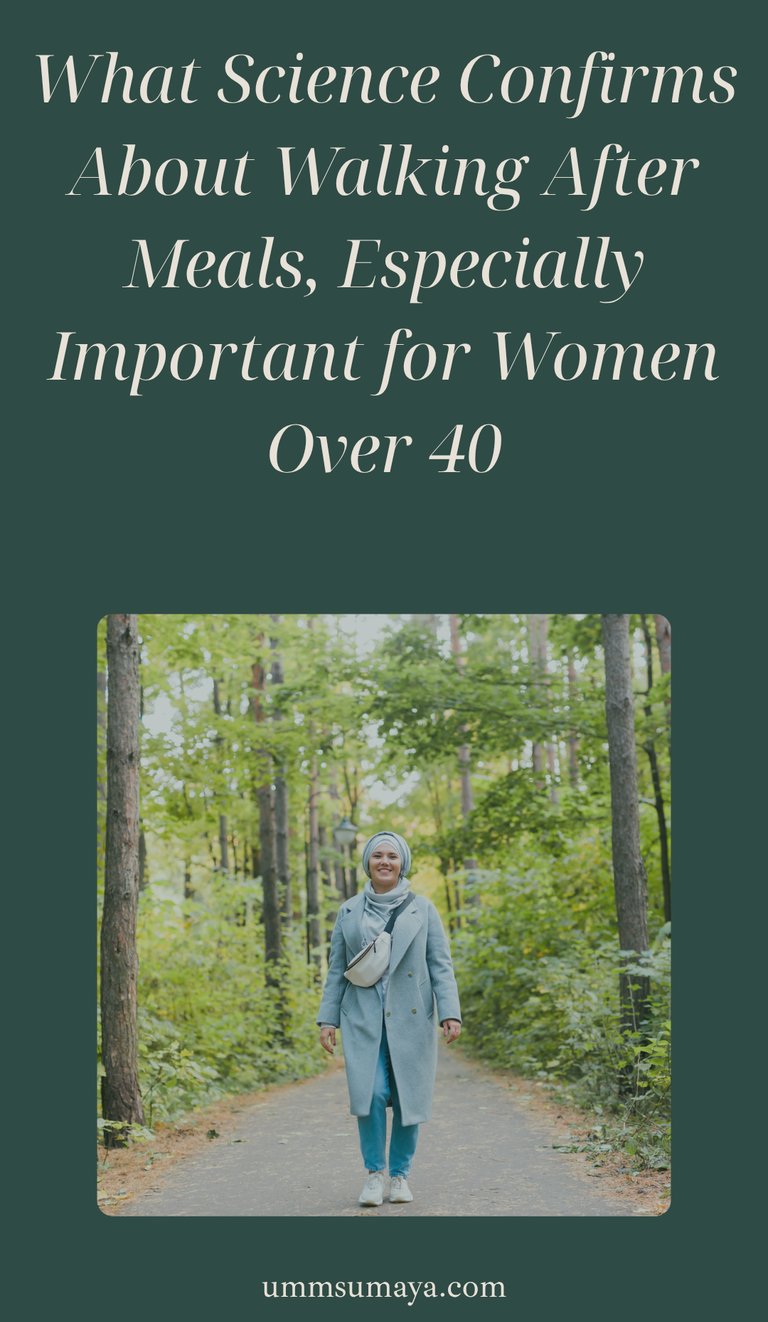
Research consistently shows that a short walk of 10–15 minutes after eating significantly reduces the post-meal blood sugar spike. The muscles, when active, take up glucose directly, reducing the demand on insulin and flattening the energy curve that follows a meal. This single mechanism has knock-on effects across digestion, mood, energy, sleep, and weight.
The Timing Is What Matters
This is important: studies comparing a 30-minute walk at a neutral time of day with a 10-minute walk directly after eating have found the shorter post-meal walk to be more effective for blood sugar management. It is not the duration that produces the benefit, it is the timing.
For the sister who feels she does not have time for a full workout, this is genuinely good news. Ten minutes, three times a day after meals, is more metabolically beneficial than one longer walk at a random point in the day.
The Wider Benefits for Women Over 40
Blood sugar is the headline benefit but it is far from the only one. Here is what a consistent post-meal walking habit does for the body and mind of a Muslim woman in midlife:
• Digestion — gentle movement aids gastric motility. Bloating, heaviness, and discomfort after meals reduce significantly with even a short walk.
• Mood — movement releases endorphins. For women navigating the emotional volatility of perimenopause, this is not a small thing. The afternoon walk becomes a reliable mood regulator.
• Sleep — blood sugar stability throughout the day supports more stable sleep. Disrupted sleep is one of the most common and debilitating symptoms of perimenopause. The habit that stabilises blood sugar during the day quietly improves sleep at night.
• Weight management — consistent post-meal walking supports the metabolic processes that become less efficient after 40. It is not a weight loss protocol on its own, but it is a meaningful piece of a sustainable approach.
• Cognitive clarity — the afternoon brain fog that many women over 40 experience is closely linked to the post-meal blood sugar drop. Walking after eating can significantly reduce this fog.
Walking, Dhikr, and the Integration of Deen and Body
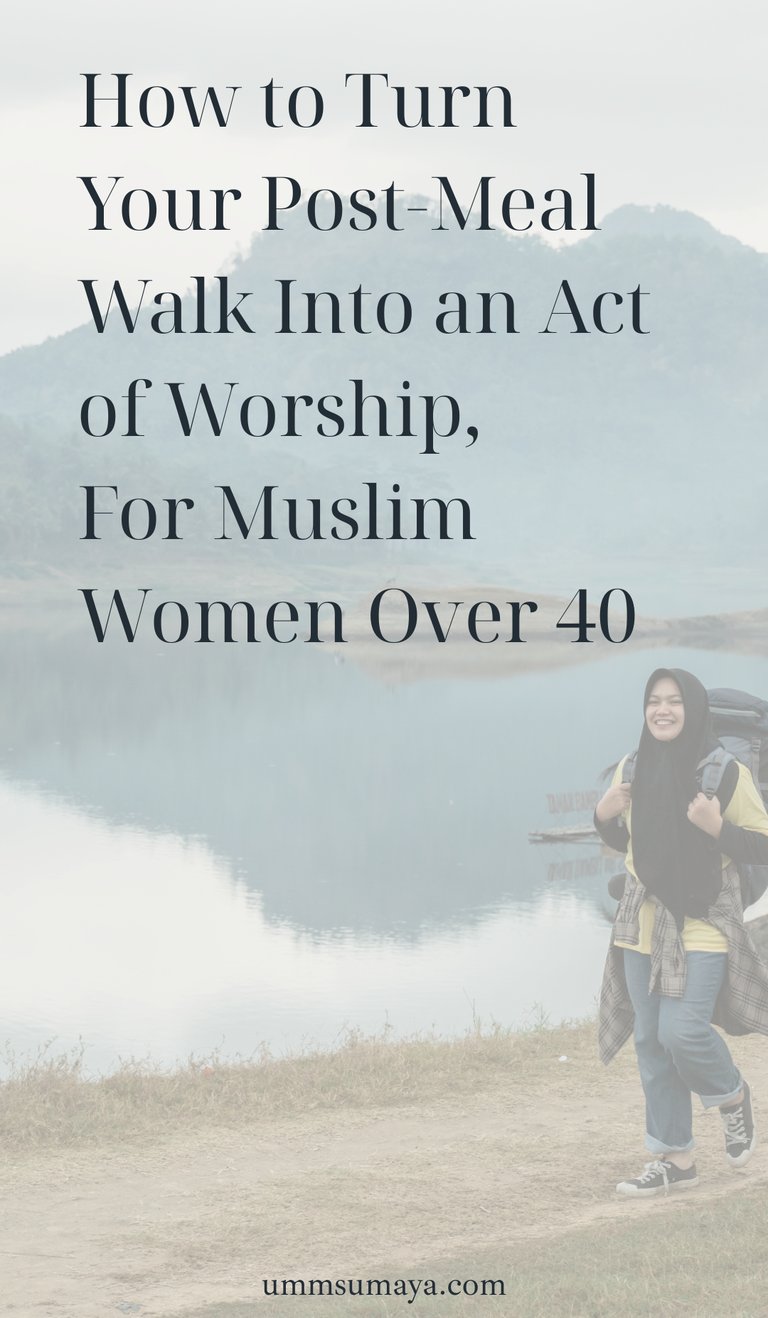
Here is where this habit becomes something more than a health strategy.
The post-meal walk is a natural container for dhikr. Ten to fifteen minutes of gentle movement, away from screens, away from demands, with the body in motion and the mind briefly free, this is an ideal time for the remembrance of Allah.
"Verily, in the remembrance of Allah do hearts find rest." — Quran 13:28
Subhanallah with each breath. Alhamdulillah for the meal just eaten, for the body that is walking, for the afternoon light. La ilaha illallah as a rhythm beneath the steps. This is not a technique borrowed from mindfulness culture. This is the Muslim woman living her deen in her body, in an ordinary afternoon, in ten minutes that cost her nothing.
The integration of dhikr and movement also addresses something the science cannot measure, the heaviness that comes from a life lived primarily indoors, primarily sedentary, primarily on screens. There is something in the body that needs to move through the world, to breathe outdoor air, to be reminded that it is alive and that this life is a gift.
Walking after meals with dhikr on your lips is an act of worship, an act of health, and an act of gratitude simultaneously. This is what it looks like to honour the amanah of the body from within the deen.
It does not require motivation. It does not require a gym. It does not require a body that looks a certain way or a fitness level you have not yet reached. It requires intention, and ten minutes.
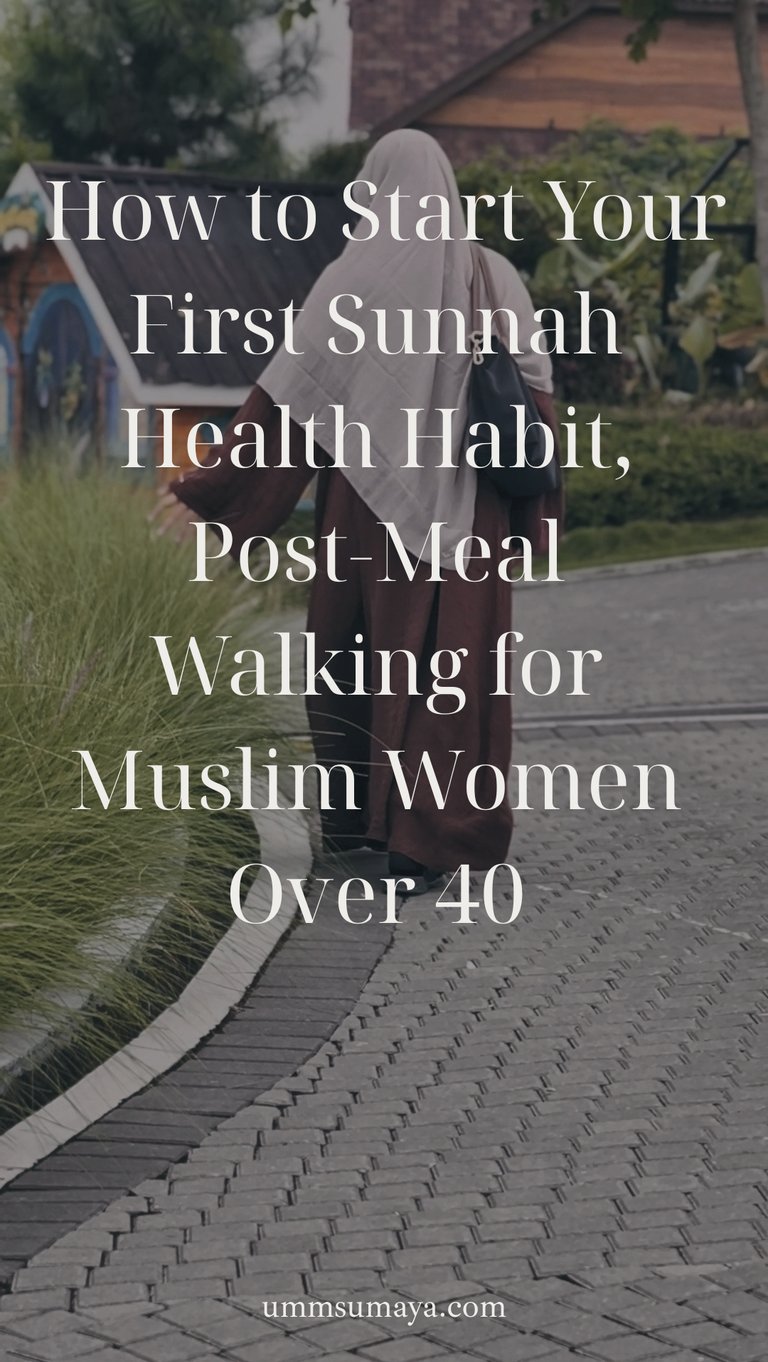
How to Begin, Making This Your First Sunnah Health Habit
The goal is not perfection. The goal is istiqamah, steady, consistent, intentional continuation. Small and sustained always outperforms dramatic and short-lived. Here is how to begin without overwhelm:
1. Choose one meal to anchor the habit. Start with the same meal every day, lunch or your main evening meal works well. Do not try to walk after every meal from day one.
2.Set your intention before you stand up. Make niyyah. You are honouring the amanah of your body. You are following the sunnah. You are caring for what Allah gave you. This is worship.
3.Start with ten minutes only. Do not extend it in the first two weeks. The habit needs to become automatic before it grows. Ten minutes is enough, the research supports it and the consistency matters more than the duration.
4.Walk outside where possible. Natural light, fresh air, and a change of environment amplify every benefit of the walk, blood sugar, mood, mental clarity, and the quality of the dhikr.
5.Bring your dhikr. Use this time for the remembrance of Allah. Let the walk become a moving act of worship rather than just a health exercise. This is what sustains the habit when motivation fades, and motivation always fades. Purpose does not.
6.Be patient with the days you miss. Missing one day does not break the habit. The nafs al-lawwama will tell you that you have already failed and may as well stop. This is the nafs negotiating. Return the next day without drama.
What you are building is not a fitness routine. You are building a relationship between your deen and your body, one that honours both, that makes caring for yourself an act of worship rather than a burden, and that over weeks and months, changes how you feel in your body and in your salah.
One meal. One walk. Ten minutes. One intention. That is where it begins.
Looking for a place to begin with your health as an act of deen?
The Imaan Reset System is a free guide that helps Muslim women over 40 reconnect their daily habits, including how they care for their body, to their intentions, their nafs, and their relationship with Allah.
It is completely free and a gentle, grounded place to start.
A Final Word, For the Sister Who Feels Like She Has Left It Too Late
There is a particular discouragement that settles in the bodies of Muslim women in midlife. The years of not moving enough, of using food for comfort, of putting everyone else's needs before the amanah of your own body, it accumulates. And somewhere in the accumulation, many sisters conclude that it is too late. That their body is too far gone. That the gap between where they are and where they want to be is simply too large to cross.
This is the nafs speaking. And it is wrong.
The body is extraordinarily responsive. At 40, at 50, at 60, it responds to care. It responds to movement. It responds to nourishment. It is never too late to begin honouring the amanah. And the beginning does not have to be dramatic or difficult or painful.
It can be ten minutes after lunch.
It can be today.
'Your body is an amanah. You do not need to transform it overnight. You need to begin caring for it, one meal, one walk, one intention at a time.'
والله أعلم — And Allah knows best