
Why You Keep Choosing What You Don’t Actually Want (The Role of the Nafs)
A deep reflection on self sabotage, repeated patterns, and the internal conflict between the heart and the nafs. This post explores why Muslim women often keep choosing comfort, avoidance, and temporary relief over the change they truly want, and how awareness, honesty, and returning to Allah can begin to break the cycle.


The Struggle of Misalignment
Many Muslim women over 40 experience a profound internal conflict as they navigate their desires and actions. This struggle often manifests as a lingering sense of frustration, guilt, and confusion, creating a disconnect that can feel overwhelming. These emotions are not uncommon; they resonate deeply with those who find themselves caught in cycles of self-sabotage, continually choosing paths that diverge from their true wants.
For instance, a woman may aspire to establish a meaningful career that aligns with her values. However, she may find herself becoming overwhelmed by familial responsibilities or societal expectations, leading her to prioritize others’ needs over her own ambitions. The nafs, which represents the self and its desires, often plays a crucial role in these decisions. While it can drive us toward positive goals, it can also lead to self-doubt and the overwhelming need to conform to external pressures.
This disconnect frequently evokes feelings of guilt, as women grapple with their inability to achieve what they genuinely desire. They may question, "Why can’t I pursue what I want?" or "Why do I always end up in the same self-defeating patterns?" Such thoughts can create a chasm between self-acceptance and the desire to break free from the cycle of misalignment. The stress of these recurring patterns varies, but it often leaves women feeling trapped and introspective.
As they reflect on their experiences, the yearning for change becomes more pronounced. The conflict between the desires of the nafs and the perceptions of duty can lead to confusion, as aspirations clash with reality. By understanding and addressing this dynamic, women can begin to untangle the layers of emotional struggle, paving the way for a more harmonious and fulfilling life. Recognizing these patterns is the first step toward alignment, offering hope for a more authentic existence.
Free download
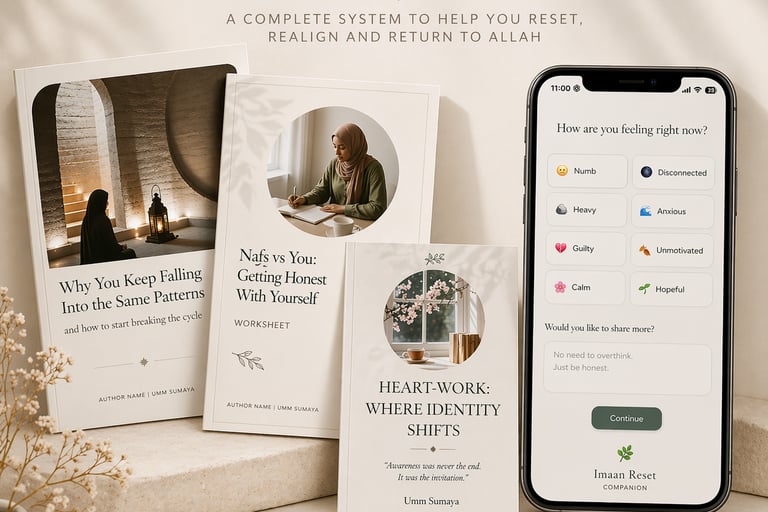
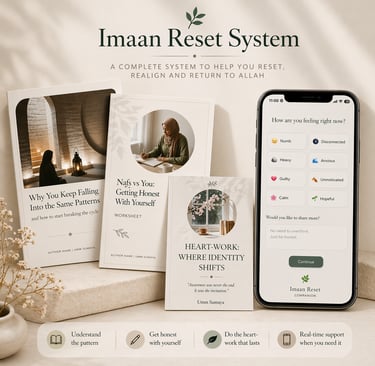
Understanding Repeated Patterns: The Dance of Disconnection
The phenomenon of self-sabotage is often characterized by a cyclical nature that can be profoundly perplexing. Many individuals find themselves stuck in a repetitive dance, perpetually choosing behaviors that lead them away from their true desires and values. This disconnection between intention and action can manifest in various forms, such as procrastination, emotional eating, or retreating into comfort habits. Each of these behaviors serves as temporary refuges from the discomfort of confrontation, yet they contribute to a broader cycle of dissatisfaction.
For instance, delaying critical tasks can stem from a fear of failure or an overwhelming sense of inadequacy. In these moments, distraction becomes a preferred alternative, offering solace but ultimately resulting in increased stress and regret. Similarly, emotional eating often emerges as a coping mechanism. The act of consuming food becomes intertwined with emotional states, leading to a false sense of comfort while simultaneously fostering a disconnection from one’s health goals.
Comfort habits, such as excessive screen time or aimless browsing, serve as distractions that seem harmless yet inhibit progress in personal or professional domains. Individuals may gravitate towards these behavior patterns during times of stress or uncertainty, where the choice of what feels familiar outweighs the pursuit of genuine fulfillment. The allure of comfort lies in its immediacy, providing instant gratification instead of the delayed but more meaningful rewards of change.
This cycle perpetuates itself, reinforcing a resistance to change. While the desire for improvement is present, the fear of the unknown often looms larger, creating a formidable barrier to personal growth. Recognizing these patterns is a vital step towards dismantling them, opening pathways to more fulfilling choices that align with one’s true aspirations.


The Role of the Nafs: Comfort vs. Growth
The concept of the nafs is central to understanding the internal struggles individuals face when it comes to personal growth and change. In many ways, the nafs embodies the desires and inclinations that steer people towards comfort rather than challenge. It functions as a psychological mechanism that seeks to preserve a state of ease and avoidance, often justifying procrastination through rationalizations such as "I’ll do it later" or "just this once." These phrases serve as a shield against the discomfort that tends to accompany necessary changes.
The nafs tends to prioritize immediate gratification over long-term benefits, creating a barrier to emotional and spiritual development. For instance, when confronted with tasks that demand effort—be it pursuing a new skill, addressing personal issues, or engaging in self-reflection—the nafs might whisper sweet nothings that encourage retreat into familiar, yet unfulfilling habits. This tendency to choose comfort is evidently reinforced by societal structures that promote instant rewards, further entrenching a cycle of avoidance.
This persuasive nature of the nafs can lead individuals to reflect on their life choices. Each procrastination justified by the need for comfort detracts from potential growth. Instead of confronting the discomfort of change, the nafs wraps individuals in a cocoon of contentment, albeit at great cost. As this cycle continues, one may find themselves stagnating, missing out on opportunities for fulfilling experiences that challenge the status quo.
Understanding the dynamic between the nafs and growth is crucial. It becomes evident that while the nafs can offer temporary solace, it is ultimately at odds with the deeper desires for achievement and growth that reside within. In acknowledging this tension, one can begin to break free from the confines of the nafs, paving the way towards a more courageous approach to change and personal evolution.


Real-Life Self-Sabotage Examples: Moments of Recognition
Self-sabotage can manifest in various ways, often allowing individuals to hinder progress in pursuit of their genuine desires. One common scenario is emotional eating, where individuals consume food not out of hunger, but to quell feelings of anxiety, sadness, or stress. Picture a person arriving home after a long day; instead of preparing a wholesome meal, they find themselves reaching for a bag of chips or sweets. This choice may provide momentary comfort but ultimately detracts from their health goals, demonstrating a disconnect between what they truly want and their present actions.
Another prevalent example is procrastination. Consider a student who has a paper due the next day. While they know that starting early would reduce stress, they instead choose to watch television or scroll through social media. In doing so, they experience the illusion of relaxation while simultaneously drifting farther away from their academic aspirations. Here, the conflict between immediate gratification and long-term goals illustrates the struggle against one’s own nafs, leading to choices that interfere with genuine intent.
Finally, the compulsive urge to scroll through social media platforms can be another form of self-sabotage. A person may feel an innate desire to connect with others or engage in meaningful activities. However, they often find themselves lost in an endless stream of posts, videos, and distractions, neglecting the hobbies or relationships they truly value. The time spent absorbed in this digital realm can further exacerbate feelings of isolation and dissatisfaction, reinforcing a cycle of unfulfilling behavior.
Recognizing these patterns of self-sabotage is pivotal for personal growth. Reflecting on one’s own experiences can reveal rich insights into behavioral choices that diverge from true objectives, empowering individuals to break free from these cycles. Understanding the causes behind such actions fosters self-awareness, enabling individuals to align their daily choices with their deepest desires.


Why Comfort Feels Safer: Emotional Safety Traps
The concept of emotional safety plays a significant role in the human experience, particularly in how individuals respond to familiar patterns of behavior. The nafs, often understood as the self or ego, tends to gravitate towards comfort due to the immense psychological security it provides. This inclination manifests in habitual actions and well-established routines that can shield individuals from the anxiety associated with the unknown.
Engaging in comfort habits may serve as a form of emotional insulation. For instance, when faced with the prospect of change, individuals may default to behaviors that evoke feelings of nostalgia and safety, despite these habits contributing to inner conflict. The ambivalence arises primarily because, on one hand, there is a deep-seated longing for growth and advancement; on the other, the fear of venturing into uncharted territory instills a sense of anxiety that stifles this desire for progression.
This dichotomy necessitates a moment of honest introspection. Individuals often find themselves in a tug-of-war between the comfort associated with the familiar and the potential rewards of change. The nafs becomes entrenched in self-preservation, favoring the predictable even when it does not align with genuine aspirations. This reality reveals a paradox: while comfort sustains a semblance of emotional security, it paradoxically constricts personal development.
Ultimately, the realization that familiarity does not equate to fulfillment is critical. Stepping away from comfort zones requires courage and a willingness to confront discomfort. It is through exploring this discomfort that one can identify true desires and pathways to growth, thereby allowing a shift from merely existing within emotional safety traps to thriving beyond them.


The Heart-Nafs Conflict: Desires vs. Fears
The internal conflict between the heart and the nafs represents a profound emotional struggle that many individuals encounter. The heart typically seeks true alignment with Allah, aspiring towards spiritual growth and fulfillment of higher ideals. In contrast, the nafs, or the ego, often gravitates towards immediate comfort and the familiar patterns of behavior that offer temporary satisfaction, albeit at the cost of long-term well-being.
Individuals can find themselves in a tug-of-war, where the heart passionately desires to pursue righteous paths, striving for personal and spiritual development. It is in this state that one yearns for deeper connections, holds ideals of morality, and upholds the values that foster a sense of purpose and inner peace. However, the nafs often presents a contrasting agenda, steering individuals towards habits and choices that are rooted in fear and avoidance. This struggle can lead to the feeling of being torn between high aspirations and the instinctual pull towards what is comfortable and known.
Fear can play a pivotal role in this conflict, as the nafs uses it as a mechanism to discourage individuals from stepping into the unknown. Such fears could manifest as anxiety about failure, rejection, or the challenges that accompany significant lifestyle changes. This instinctual response aims to preserve the status quo, often leading to a stagnation of personal growth. The redundancy of these limiting habits can be particularly challenging to break free from, as they may feel safer despite their detrimental impact on one’s journey.
Ultimately, understanding this heart-nafs conflict is crucial for anyone seeking to transcend their limitations. By recognizing the behaviors driven by the nafs, individuals can begin to cultivate a deeper awareness of their true desires and motivations. Addressing these internal conflicts is vital not just for spiritual alignment, but for achieving a more enriching and fulfilling life that reflects their authentic self.


Awareness, Interruption, and Returning to Allah Sincerely
In contemporary life, individuals often find themselves caught in cycles of self-sabotage, leading to choices that do not align with their authentic desires. This phenomenon can be deeply tied to the nafs, or the self, which may steer individuals toward short-term gratification rather than long-term fulfillment. Developing self-awareness stands out as a vital strategy in breaking these patterns. By cultivating awareness of one's thoughts, feelings, and behaviors, individuals can begin to recognize when their nafs is driving them away from what they truly desire.
Interrupting these patterns involves conscious reflection and the practice of mindfulness. Engaging in moments of stillness allows one to pause and assess the motivations behind their decisions. For instance, employing tools such as journaling or meditation can create a space for honest introspection. Throughout this process, it is essential to nurture a sincere intention to reconnect with Allah. This connection serves as a grounding force that can guide individuals back to their true selves, providing clarity and direction.
One effective strategy for fostering this connection is to engage in regular prayer and supplication. These practices not only serve to elevate spiritual consciousness but also provide a moment to articulate one's innermost desires to Allah. Furthermore, seeking knowledge through reading and reflecting on religious texts can illuminate the path toward emotional healing and foster a deeper understanding of the concept of the nafs. By laying down the burdens it carries, individuals can liberate themselves from the distractions that lead to insincere choices.
Ultimately, the journey toward authentic reflection and self-aware living is a gentle, compassionate process. It is a gradual return to alignment with one's true purpose, enhanced by sincere intention and consistent spiritual practice. As one embraces this journey, the burdens begin to lift, allowing for a life characterized by authenticity and fulfillment.